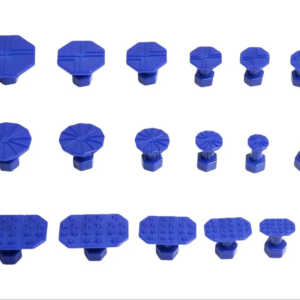
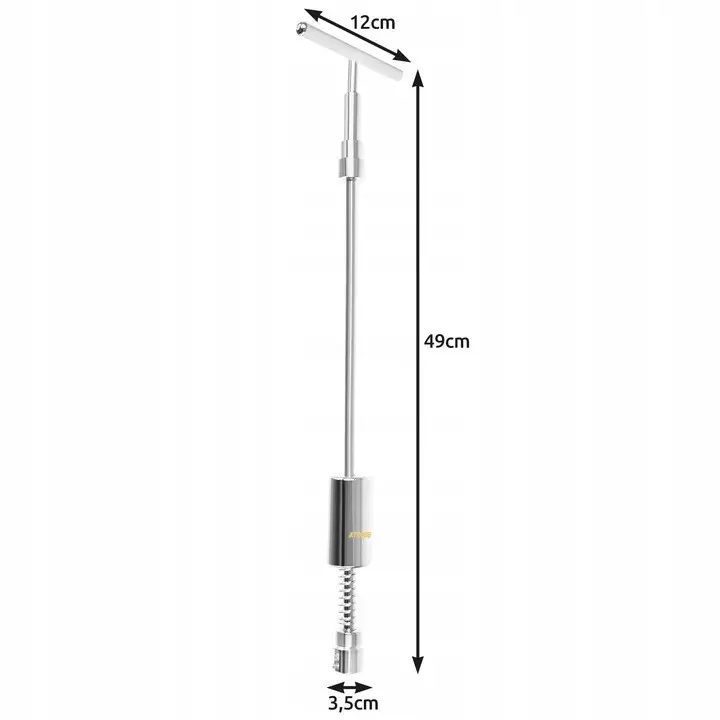
Glue pulling works on dents with intact paint, no sharp creases and not on a body line or panel edge. Degrease with 90%+ isopropyl alcohol, warm the panel slightly, glue a tab a little smaller than the dent to its centre with hot PDR glue and, once it sets, pull with a T-handle or slide hammer — gradually, in several goes. Remove the glue with alcohol and a plastic scraper.
PDR (paintless dent repair) means fixing dents without repainting. Professionals work with rods from inside the panel, while at home the most accessible method is glue pulling: a plastic tab is glued to the dent and pulled with a T-handle or a slide hammer. The metal gradually comes back and the factory paint stays.
When the method works and when it doesn’t
- Works: shallow dents from hail, a neighbour’s door in a car park, a ball, a branch. Paint intact, no cracks or chips.
- Hard: dents on body lines and panel edges, sharp creases, stretched metal. These rarely go without a pro with rods.
- Not worth it: if the paint is cracked or the part has been resprayed. The glue holds hard and can pull poorly applied paint off with the tab. Try an inconspicuous spot first.
What you need
- A kit with tabs and a puller: a T-handle for small dents, a slide hammer for deeper ones.
- A glue gun and dedicated PDR glue — ordinary craft sticks hold worse and release differently.
- 90%+ isopropyl alcohol and a plastic scraper.
- A heat gun to warm the panel slightly in cool weather.
Collision trainer Toby Chess said his first glue-pull attempts gave mixed results until he changed two things. The first was the alcohol: the glue maker compared 70% isopropyl to “water” and told him to use 90% or more. The second was temperature: a warmed panel, pulled once it cools, works many times better.
based on Repairer Driven News and the KECO guideStep by step
- Wash and degrease. First a wax-and-grease remover, then 90%+ isopropyl alcohol — on the panel and on the tab face.
- Warm the panel. In cold weather warm the spot slightly with a heat gun until it feels warm but not hot (about 50–60 °C). Work in the shade: in the sun the glue sets unevenly.
- Pick a tab slightly smaller than the dent. Long tabs for long dents, round ones for round dents.
- Apply glue evenly to the tab face and set it exactly in the centre of the dent. Don’t move it.
- Wait a few minutes — the glue should be hard to the touch. It pulls best once the panel has cooled to room temperature.
- Pull gradually. Smoothly with the T-handle, with light taps of the slide hammer. Don’t try to pull it all at once: a hard jerk can raise a high spot.
- Remove the glue. Spray alcohol at the glue edge and lift it with a plastic scraper.
- Repeat. Large dents are pulled from the edges to the centre, several times, finishing with smaller tabs.
If the tab pops off and the glue stays on the panel, that’s normal and happens often. Alcohol on the edge, scraper, fresh glue, and go again. Body techs say repeating the process several times on one dent is routine, not a sign of a mistake.
If you raise a high spot
An over-pulled dent leaves a bump. Knock it down with a plastic or nylon knockdown and light hammer taps around the edges of the bump, bit by bit, checking flatness in the reflection of a lamp on the panel. Several light taps beat one hard hit.
Warming and the heat gun
A compact heat gun with smooth temperature control is enough for warming: the key is not to overheat the clear coat. Keep it moving 10–15 cm from the surface and check the panel with your hand.
On aluminium panels (bonnets and doors of many modern cars) the metal behaves differently: it is heated more, worked faster and pulled once it cools. If you’re not sure what the part is made of, try a magnet: it won’t stick to aluminium.
FAQ
Will the glue damage the paint?
Not factory paint in good condition. The risk is on resprayed parts and where the paint is already cracked: the glue can pull a layer off. Try an inconspicuous spot first.
T-handle or slide hammer?
A T-handle pulls smoothly and precisely — for small dents. A slide hammer gives short jolts and suits deeper dents that need more force.
Can I use ordinary hot-melt glue?
You can try, but dedicated PDR glue holds harder and releases predictably. Craft sticks often let go too early or are very hard to remove.
How many pulls will it take?
A small dent — one or two. A large one — from the edges to the centre, five to ten goes with different tabs. That’s normal.
Sources and workshop experience
- Repairer Driven News / KECO — glue-pulling best practices: 90%+ isopropyl alcohol, warming the panel, pulling after it cools
- Repairer Driven News — glue pulling on aluminium panels: heat and work quickly
Updated 30.09.2026 · PayPayPlast editorial team — we test the advice on our own repairs
Read next
 Body and interiorHow to remove a door panel without breaking the clipsSpeakers, sound deadening, a window regulator — it all starts with the door panel off. How to remove it without snapping, where the screws hide and how to match new clips.4 min readRead
 Plastic weldingHow to choose a hot stapler or a plastic welding ironStaples or rod, 50 or 110 W, a kit or just the tool. We compare the options and explain what to buy for your repair.4 min readRead
 Plastic weldingHow to weld plastic with a rod: step by step and 7 mistakesGroove, heat, rod feed and cooling. How to make a seam that won’t chip off, and what not to do even “to save time”.4 min readRead
Cannot find your case? Message us on Telegram and we will tell you exactly what to take for your part.
Message us on Telegram